AI Business Tools Versus Hiring In-House Staff: What Every Business Owner Needs to Know
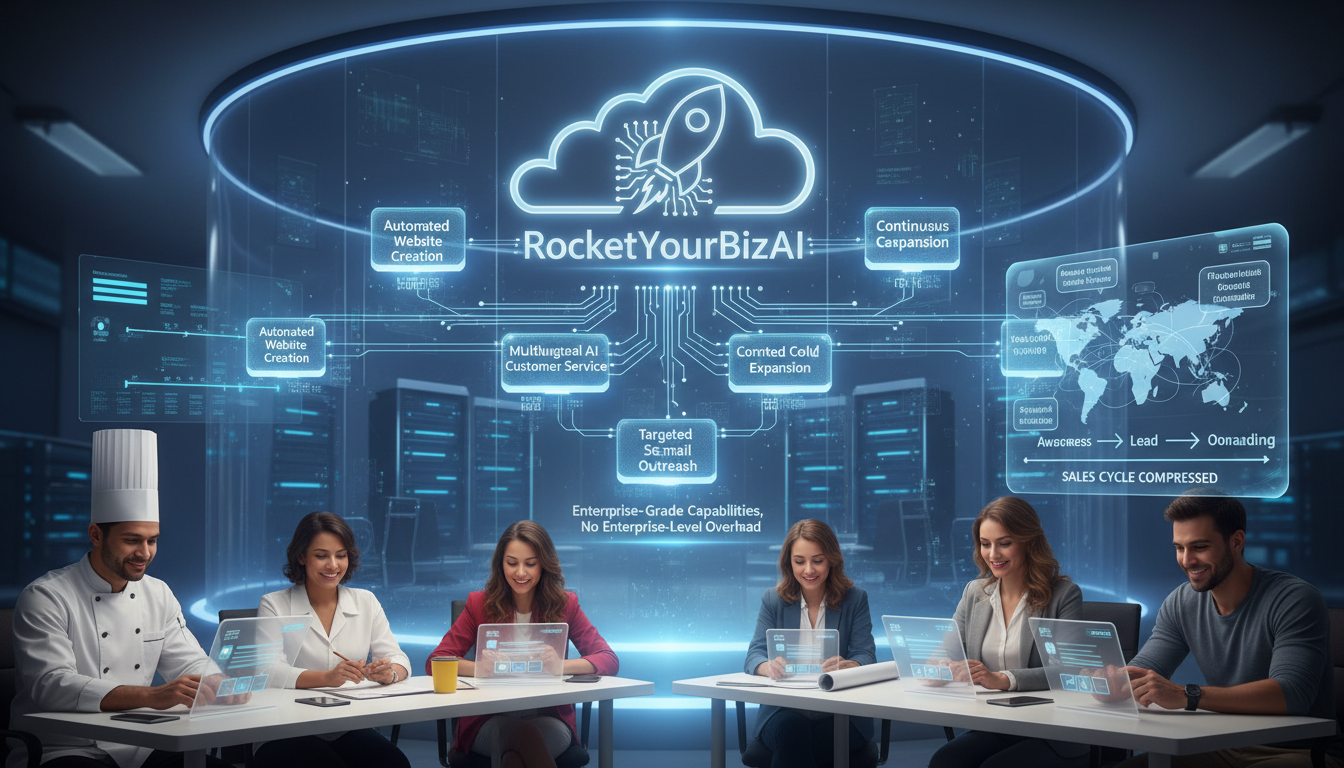
The decision between investing in AI business tools versus hiring in-house staff is one that RocketYourBizAI helps business owners navigate every day. It is one of the most consequential choices a growing company can make, and getting it wrong can cost tens of thousands of dollars annually. Business leaders across every industry are asking the same fundamental question: should I build a team internally, or should I leverage intelligent technology to handle the workload? RocketYourBizAI has worked alongside countless organizations to answer exactly that question, and the findings consistently point in a clear direction. AI business tools deliver extraordinary value at a fraction of the cost, and understanding why starts with an honest look at what in-house hiring actually requires.
The True Cost of Hiring In-House Staff
Most business owners underestimate the real cost of adding employees to their payroll. The salary is only the beginning. When you hire a full-time staff member, you are also committing to a long list of expenses that compound quickly and quietly over time.
Salaries, Benefits, and Overhead
Consider a mid-level marketing coordinator earning $55,000 per year. On top of that salary, you are typically adding 20-30 percent in employer-side payroll taxes and benefits, pushing the true cost to $66,000-$71,500 annually. Add health insurance contributions, retirement matching, paid time off, and any performance bonuses, and that number climbs further. Office space, equipment, software licenses, and administrative overhead layer on additional costs that are easy to overlook during the hiring phase but unavoidable once the employee is onboarded.
Training, Turnover, and Lost Productivity
The Society for Human Resource Management estimates that replacing an employee costs an average of six to nine months of that employee's salary. For that same $55,000 coordinator, turnover could cost your business $27,500-$41,250 per departure. Training a new hire takes weeks or months before they reach full productivity, during which time your existing team absorbs additional workload. When turnover happens repeatedly, the financial and operational drain becomes significant. These are not hypothetical risks. They are standard realities of building and maintaining an in-house team.
Management Time and Scaling Challenges
Every employee you add requires management attention. Supervision, performance reviews, conflict resolution, scheduling, and team coordination all demand time from your leadership. As your business grows and your team expands, management complexity grows with it. Scaling an in-house department means going through the entire hiring cycle again and again, each time investing months of effort before reaching full operational capacity. This friction slows your ability to respond to market opportunities and increases operational risk during growth periods.
What AI Business Tools Actually Deliver
AI business tools have matured dramatically over the past several years. Today's intelligent systems are not novelty products or experimental technology. They are production-ready platforms capable of handling sophisticated, high-volume business functions with consistency, speed, and accuracy that human teams often cannot match at scale.
Around-the-Clock Availability and Instant Scalability
One of the most significant advantages of AI business tools versus hiring in-house staff is availability. An AI system does not take sick days, go on vacation, or log off at 5:00 PM. It operates continuously, processing requests, generating output, and supporting your operations every hour of every day. When your business experiences a surge in demand, whether seasonal or unexpected, AI tools scale instantly to meet that demand without the delays associated with recruiting, interviewing, and onboarding new personnel. This elasticity gives businesses a competitive edge that is genuinely difficult to replicate with a traditional workforce model.
Consistent Output Quality Across All Tasks
Human performance varies. Employees have good days and difficult days. They get fatigued, distracted, and overwhelmed. AI business tools deliver consistent output regardless of volume or timing. Whether you are processing 10 tasks or 10,000, the quality remains stable. For business functions where consistency directly affects customer experience or regulatory compliance, this reliability is not just a convenience. It is a strategic asset that protects your reputation and reduces costly errors.
Breadth of Function at a Single Investment Point
A well-deployed AI business platform can perform functions that would traditionally require multiple specialized hires. Content creation, customer communication, data analysis, scheduling, lead nurturing, reporting, and workflow automation can all be handled within a single integrated system. The cost to replicate those capabilities with dedicated in-house staff would typically range from $180,000-$400,000 or more in annual salaries alone, not counting benefits and overhead. AI business tools provide comparable functional coverage at investment levels that represent a fraction of that figure.
Side-by-Side Comparison: AI Tools Versus In-House Hiring
When RocketYourBizAI conducts a comparison for business owners, the numbers are eye-opening. Understanding the difference requires looking at total cost of ownership over a one-to-three-year horizon, not just the upfront investment on either side.
First-Year Investment Analysis
In the first year of hiring a small in-house team of three employees, a typical business might spend $210,000-$280,000 when accounting for salaries, benefits, training, equipment, and recruiting fees. That same year, a comprehensive AI business tools platform might cost $15,000-$60,000 depending on the scope of deployment and the vendor selected. The gap in first-year investment is dramatic, and it widens in subsequent years as employee costs rise with annual raises, expanded benefits, and the ongoing cost of retention efforts. AI platform costs, by contrast, often decrease on a per-output basis as usage scales.
Operational Efficiency and Speed to Output
A newly hired employee typically reaches full productivity after 60-90 days. An AI business tool, once configured and integrated, begins delivering output from day one. For businesses operating in competitive markets where speed matters, this difference in time-to-value is significant. A company using AI tools can launch a campaign, respond to customer inquiries, generate reports, and execute workflows in the time it takes an in-house team member to complete morning onboarding paperwork. The operational velocity that AI enables translates directly into competitive advantage and faster return on investment.
Risk Profile and Business Continuity
In-house staffing carries inherent risks that AI business tools do not. Key person dependency is one of the most common vulnerabilities in small and mid-sized businesses. When a critical team member leaves suddenly, the organization can be left scrambling to cover responsibilities while conducting an emergency search for a replacement. AI systems do not resign, negotiate offers from competitors, or require succession planning. They provide a stable operational foundation that supports business continuity regardless of changes in personnel or market conditions.
Industries Where AI Business Tools Outperform In-House Staffing
While the value of AI business tools extends across virtually every sector, certain industries are experiencing particularly dramatic results when they make the transition away from heavy in-house staffing models. RocketYourBizAI has seen transformative outcomes in several high-activity verticals.
Marketing and Lead Generation
Marketing is among the most labor-intensive functions in any business. Content production, social media management, email campaigns, SEO, analytics, and lead nurturing traditionally require multiple specialized roles. AI business tools can now handle the majority of these functions with minimal human oversight, freeing leadership to focus on strategy rather than execution. Businesses that have transitioned from fully staffed marketing departments to AI-driven marketing operations often report cost reductions of 40-70 percent while maintaining or improving campaign output volume and quality.
Customer Service and Communication
Customer service is another area where AI business tools versus hiring in-house staff delivers a clear verdict in favor of technology. AI-powered communication tools handle inbound inquiries, qualify leads, schedule appointments, provide product information, and escalate complex issues to human agents when necessary. A single AI system can manage thousands of simultaneous customer interactions at a cost that would require dozens of full-time customer service representatives to match in a traditional staffing model. Response times improve, customer satisfaction scores rise, and the business operates at a service level that would be financially prohibitive to achieve through headcount alone.
Administrative Operations and Data Management
Back-office administrative functions including scheduling, invoicing, reporting, data entry, and document management consume significant staff hours in organizations that rely on manual processes. AI automation tools eliminate the repetitive burden of these tasks entirely, processing high volumes of administrative work with precision and speed. Organizations that deploy AI for administrative operations typically see labor cost reductions of 30-60 percent in those functions, with accuracy rates that exceed what manual data handling reliably produces.
How RocketYourBizAI Helps You Make the Right Decision
At RocketYourBizAI, we understand that every business has unique needs, and we do not believe in a one-size-fits-all answer. Our role is to give you the clearest possible picture of what AI business tools can deliver in your specific context, compared directly to what it would cost and take to staff those functions internally. That comparison is the foundation of every conversation we have with business owners who are weighing this decision.
Our team will walk you through a detailed analysis of your current or planned staffing structure, identify which functions are strong candidates for AI automation, and show you the projected cost difference over a one, two, and three-year period. We do not push you toward a solution that does not fit. We build the case on data, and we let the numbers guide the conversation. Many business owners who come to us expecting a modest efficiency gain leave the conversation understanding that AI business tools represent a fundamentally different and more scalable operating model than traditional hiring.
We also address the concerns that business owners most commonly raise. Will the technology integrate with existing systems? Yes, modern AI platforms are built for interoperability and connect with the tools your team already uses. Will the output quality meet your standards? We demonstrate real output before you make any commitment. Will customers notice the difference? In most cases, customers experience faster response times and more consistent service, which improves satisfaction rather than diminishing it.
The conversation about AI business tools versus hiring in-house staff does not have to be complicated, and it does not have to be uncertain. RocketYourBizAI has done this analysis for businesses across industries and revenue levels, and we bring that experience directly to your situation. Call 470-467-8216 today and let RocketYourBizAI give you a side-by-side comparison of AI tools versus in-house hiring for your specific situation. The information is free, the analysis is customized, and the potential savings are real. Your business deserves to operate at the highest possible efficiency, and RocketYourBizAI is ready to show you exactly how to get there.